





Rolling wave programming
Programmes describe the sequence in which tasks must be carried out so that a project (or part of a project) can be completed on time. They offer a view of how the project will be divided into activities, the duration of those activities, and logic links to preceding and succeeding activities.
Programmes may be depicted as Gantt charts, bar charts, line-of-balance diagrams, pure logic diagrams, time-scaled logic diagrams, time-chainage diagrams and so on.
For more information see: Programme for building design and construction.
Rolling wave programming (or rolling wave planning) is a method of programme development in which the details of the programme are progressively elaborated as the project proceeds. This is based on the assumption that it will be possible to develop the plan for specific activities in more detail closer to the time that they are actually executed.
Ref The Society of Construction Law Delay and Disruption Protocol, 2nd edition, published in February 2017 by the Society of Construction Law (UK).
NB Earned Value Management Handbook, Published by the Association for Project Management in March 2013 suggests that planning packages (PPs): ‘…represent work that cannot yet be planned as work packages because of a lack of detailed information. They must be converted into work packages before they can commence.’
It proposes that: ‘The requirement for a periodic conversion, from planning package to work package, is the result of setting up the project using rolling wave planning, whereby only the current phase of a project is planned in detail and future phases are planned in outline. The conversion process is a fundamental aspect of project control using EVM (earned value management) and results in a more controlled project baseline.’
[edit] Related articles on Designing Buildings Wiki
Featured articles
Check out some of the best features and news from Designing Buildings as well as key stories from around the web.
Construction Management, 8 July

NEETs crisis drives interest in trades, but apprenticeships barriers remain.
Passive fire protection webinar
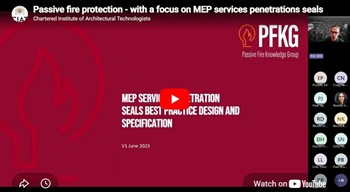
MEP services penetration seals.

Where its at podcast (and video) - The role of the Architectural Technologist as an Expert Witness.
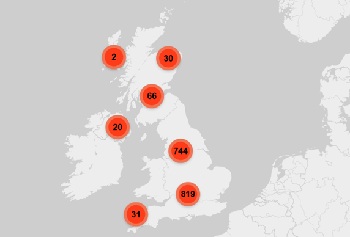
More than 200 remarkable buildings added to SAVE’s Buildings at Risk register.

Government scraps pre-application consultation for Nationally Significant Infrastructure Projects.
Historic England and infrastructure
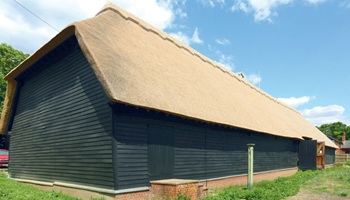
New projects offer opportunities for the historic environment and local communities.
Construction Management, 2 July

Construction deaths halve in two years.
Green Book changes to drive investment in all parts of UK.
Minimum energy efficiency standards (MEES)

CIAT briefing on response to consultations for privately rented non-domestic properties.
Connect, collaborate, shape the future

Registration now live for UK Construction Week Birmingham.

CIOB announces Saul Humphrey FCIOB as new President for 26/27 term.

A quick, simple, and zero-bills solution to prevent overheating.